
Philippine E-Commerce Isn’t Built for Big Spending—and That’s the Point
Updated: Jul 8
New findings from Agile Data Solutions Inc. show that storm preparedness among Filipino families is high, but extended weather-related confinement brings mental strain reminiscent of lockdown periods—pointing to gaps in local response systems that preparation alone cannot address.
14 January 2026, Manila, Philippines — For years, the promise of e-commerce has been scale: bigger baskets, faster growth, higher-value transactions. In the Philippines, however, online shopping has evolved in the opposite direction. The market is not optimized for large purchases or long-term commitment. It is designed—intentionally or not—for small, frequent, and highly controlled spending.
New consumer insights gathered by Agile Data Solutions Inc. through its Hustle PH app reveal that Philippine e-commerce is powered not by high-ticket purchases, but by restraint. Most shoppers buy often, spend little, and constantly reassess where and how they transact. This behavior is not accidental—it reflects how platforms and consumers have quietly adapted to economic pressure, logistical uncertainty, and uneven trust.
“Philippine e-commerce isn’t shaped by how much people want to spend, but by how carefully they manage what they’re willing to risk,” said Jason Gaguan, Co-founder of Agile Data Solutions Inc.
The ₱500 Economy
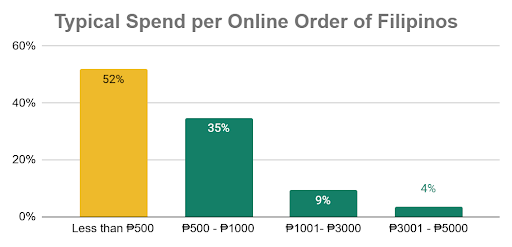
The clearest signal of this adaptation appears in basket size. Eighty-seven percent of online purchases fall below ₱1,000, and more than half (52%) are under ₱500. These figures challenge the assumption that e-commerce growth depends on increasing order values.
Instead, Philippine platforms thrive on micro-purchases: household refills, small personal items, low-risk add-ons. These transactions are easier to justify, easier to abandon, and easier to repeat. For consumers managing tight budgets, small baskets reduce regret. For platforms, they increase frequency.
“Smaller purchases are not a lack of confidence in online shopping—they’re a way for consumers to stay in control in an environment that still feels unpredictable,” Gaguan said.
The result is an ecosystem built on volume, not scale.
Comparison Is Constant, Commitment Is Not
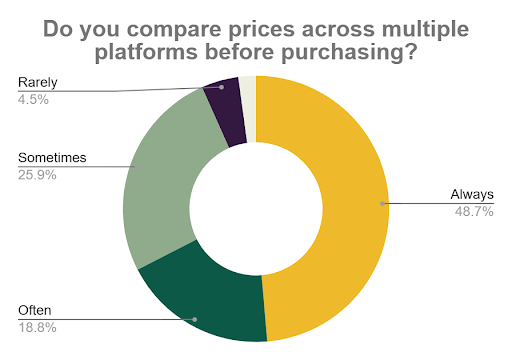
This small-basket economy is reinforced by constant price scrutiny. Nearly half of shoppers (49%) say they always compare prices across multiple platforms, while price (80%) and promotions (59%) remain the strongest drivers of platform choice.

In this environment, platforms are not destinations—they are options. A shopper may default to one app, but the final decision is often made only after checking vouchers, shipping fees, and flash discounts elsewhere.
“Platform preference today is conditional. Shoppers reassess their choice every time they check out, not once and for all,” Gaguan said.
The implication is clear: market share is never secure. It is negotiated transaction by transaction.
Why Checkout Determines Everything
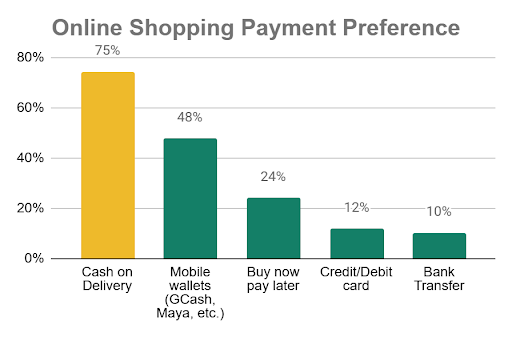
If browsing is competitive, checkout is decisive. Cash on Delivery (COD) remains the preferred payment option for 75% of shoppers, and 58% say they would not shop on a platform where COD is unavailable. Even more telling, 78% report abandoning a purchase when their preferred payment method was not offered.
These figures show that growth bottlenecks are not always about discovery or pricing. Often, they are about friction at the final step. Platforms that limit payment options—intentionally or not—exclude large portions of the market.
“Most drop-offs don’t happen because people lose interest. They happen because something at checkout makes the transaction feel uncertain or restrictive,” Gaguan said.
E-commerce in the Philippines rewards flexibility more than sophistication.
Awareness Does Not Equal Usage
Platform competition reflects these dynamics. Awareness is high across several platforms—Shopee (91%), Lazada (79%), and TikTok Shop (76%) are all widely recognized—showing that visibility is no longer the differentiator.
What separates platforms is primary use. Shopee remains the most frequently used platform (45%), followed by TikTok Shop (32%), while Lazada—despite high awareness—converts only 14% into “most-used” status. That gap points to a performance issue, not a branding one: people know the platform, but don’t default to it when it’s time to buy.
TikTok Shop’s stronger awareness-to-use conversion suggests momentum driven by decision-making experiences that happen in real time, where demonstration, urgency, and deal mechanics collide. In a market this fluid, platforms don’t win by being remembered—they win by being chosen at checkout.
“In a crowded market, being known is easy,” Gaguan said. “Being chosen, repeatedly, is much harder.”
Where the System Breaks

Despite careful spending and constant comparison, friction persists. Defective or poor-quality products are cited by 75% of shoppers as their top frustration, followed by counterfeit goods (48%), delayed deliveries (44%), high fees (33%), and frequent technical issues.
These problems explain why shoppers lean toward small purchases and why first transactions matter disproportionately. Real-time shipment tracking is considered very important by 74% of respondents, highlighting how reassurance has become a core feature, not a bonus.
A Market Designed Around Limits
Taken together, the data suggests that Philippine e-commerce has not evolved toward frictionless abundance. It has evolved toward managed limits—on spending, risk, and commitment.
Insights from Agile Data Solutions Inc.’s Hustle PH app show a market shaped by consumers who know their constraints and platforms that succeed by working within them. Growth comes not from pushing shoppers to spend more, but from making it easier to spend a little—again and again.
“Growth in Philippine e-commerce doesn’t come from pushing people to spend more—it comes from making it easier and safer to spend a little, repeatedly,” Gaguan said.
In this system, restraint is not a weakness. It is the structure that keeps Philippine e-commerce moving.
About Agile Data Solutions Inc.
Your agile partner in data-driven growth.
Agile Data Solutions Inc. is the country’s premier market research technology company. Partnered with GCash, it has the largest panel size in the Philippines, boasting more than 74 million customer data points to date.
Agile Data Solutions’ hyper-targeted customer modeling is powered by its data-gathering platform Hustle PH, which connects a network of over 1,700,000 respondents nationwide. Through advanced data collection and innovative data engineering, Agile Data Solutions Inc. has become the preferred data and market insights partner of numerous Fortune 500 companies, banks, telecommunications, and technology firms across Southeast Asia.
For more information, visit https://www.agiledatasolutions.tech/ or email agilepartners@hustle-ph.com.
Comments