

Late-Night Eating in the Philippines Is No Longer About Hunger
Updated: Jul 8

New nationwide data from Agile Data Solutions Inc. find that late-night eating has become routine for many Filipinos — but stress, screen time, and fatigue, rather than hunger, are now driving midnight cravings, turning a once-occasional habit into a coping routine.
14 January 2026, Manila, Philippines — Late-night eating among Filipinos has evolved from an occasional indulgence into a predictable coping routine shaped by stress, prolonged screen time, and modern daily pressures, according to new survey data gathered through Hustle PH, a consumer insights platform by Agile Data Solutions Inc.
The findings suggest that midnight eating is increasingly driven by emotional and lifestyle factors rather than physical hunger, reflecting broader changes in work patterns, digital habits, and how Filipinos unwind at the end of long days.
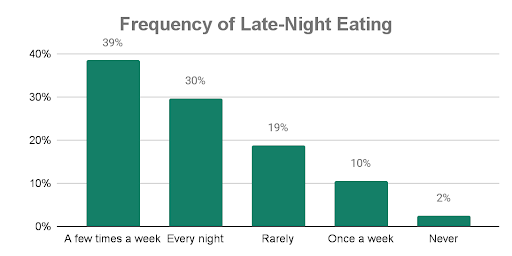
Nearly 69% of respondents said they eat late at night multiple times a week, while another 10% do so at least once weekly—indicating that late-night eating is now a regular behavior for most, rather than an exception.
“Late-night eating is no longer just about hunger,” said Jason Gaguan, co-founder of Agile Data Solutions Inc. “What the data shows is a pattern of coping—people turning to food at the end of long, stressful days, often while still glued to their screens.”
Midnight Has Become a Predictable Routine
Late-night eating activity is highly concentrated within a narrow time window. Survey data show that 92% of late-night consumption occurs between 10 p.m. and 2 a.m., turning what was once considered an irregular habit into a highly predictable routine.
Rather than being tied to hunger cues, this time clustering suggests that late-night eating aligns more closely with lifestyle rhythms—such as finishing work, extended screen use, or winding down after the day—than with meal schedules.
“This isn’t random behavior,” Gaguan said. “It’s a routine that has quietly settled into daily life.”

Stress and Screen Time Rival Hunger as Triggers
When asked what drives late-night eating, respondents pointed less to hunger and more to emotional and situational factors. Stress, binge-watching, working or studying late, and difficulty sleeping emerged as top triggers, with hunger ranking lower than expected.
According to Agile Data Solutions Inc., this pattern indicates that late-night eating increasingly functions as a form of emotional regulation—helping individuals cope with mental fatigue and overstimulation after long, digitally saturated days.

Comfort Food Dominates the Night
Food choices further support the emotional dimension of late-night eating. More than half of respondents said they crave savory comfort foods such as fries, pizza, and burgers at night, while sweet snacks and drinks accounted for a much smaller share. A notable portion also reported ordering full meals rather than light snacks.
The dominance of comfort food suggests that late-night eating is less about sustenance and more about satisfaction and relief, reinforcing its role as a coping behavior rather than a nutritional one.

Delivery Platforms Reinforce, But Do Not Cause, the Habit
Late-night eating has been reinforced by the widespread availability of food delivery services. About 74% of respondents said they have ordered food between 10 p.m. and 6 a.m., with most orders placed from home using smartphones.
Foodpanda and GrabFood dominate late-night ordering, while restaurant apps and websites account for a significantly smaller share. Despite the growth of digital payments, cash on delivery remains the most commonly used payment method at night, reflecting lingering trust and reliability concerns during off-peak hours.
“Food delivery didn’t create the stress or the fatigue,” he said. “But it made acting on a craving much easier.”
While delivery platforms did not create the emotional drivers behind late-night eating, they have reduced friction between craving and consumption—making the habit easier to repeat and normalize.

A Habit That Persists Despite Frustrations
Despite its prevalence, late-night food delivery remains a source of frustration. High delivery fees, slow service, and technical issues were frequently cited concerns. One in three respondents said they have abandoned a late-night order due to long waiting times.
Yet participation remains high, suggesting that emotional need often outweighs inconvenience. Even when the experience is less than ideal, many consumers continue to order, underscoring the strength of the habit.
Frequent, Low-Cost Orders Signal Normalization
Spending patterns show that late-night eating is emotionally driven but financially restrained. Nearly half of respondents keep their orders below ₱200, and only about one in ten spend more than ₱400 per order. Promotions and discounts play a significant role in triggering late-night orders, suggesting that while cravings are often driven by stress or fatigue, consumers remain highly price-conscious.
“People aren’t splurging,” Gaguan noted. “They’re looking for affordable comfort.”
Rather than splurging, many appear to seek affordable comfort, reinforcing late-night eating as a coping routine rather than an indulgent one.

From Impulse to Coping Routine
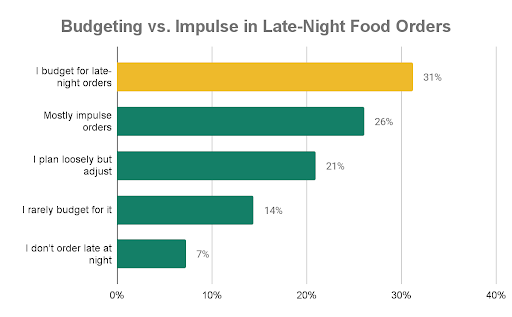
Although more than half of late-night orders are made impulsively, about one-third of respondents said they now set aside a budget for late-night eating. This suggests that what often begins as an unplanned craving can evolve into a predictable expense.
According to Agile Data Solutions Inc., this blend of impulse and planning reflects how deeply late-night eating has become embedded in daily life—less a conscious decision, more a habitual response to end-of-day pressures.
A Window Into Modern Filipino Life
The rise of late-night eating offers insight into broader lifestyle shifts among Filipinos. Longer work hours, blurred boundaries between work and rest, and constant digital engagement have extended daily routines late into the night. In this environment, food has taken on a new role—not just nourishment, but comfort and relief.
“Late-night eating gives us a glimpse into how Filipinos are coping with longer days and blurred boundaries between work and rest,” Gaguan said. “It’s a small habit that reflects much bigger lifestyle pressures.”
As captured through Hustle PH’s data, late-night eating today reflects more than changing food preferences. It highlights how Filipinos cope with stress, reclaim personal time, and navigate the demands of an increasingly connected and demanding daily life.
About Agile Data Solutions Inc.
Your agile partner in data-driven growth.
Agile Data Solutions Inc. is the country's premier market research technology company. Partnered with GCash, it has the largest panel size in the Philippines, boasting more than 74 million customer data points to date.
Agile Data Solutions’ hyper-targeted customer modeling is powered by its data-gathering platform Hustle PH, which connects a network of over 1,000,000 respondents nationwide. Through advanced data collection and innovative data engineering, Agile Data Solutions Inc. has become the preferred data and market insights partner of numerous Fortune 500 companies, banks, telecommunications, and technology firms across Southeast Asia.
For more information, visit https://www.agiledatasolutions.tech/ or email agilepartners@hustle-ph.com
Comments